How to Steam Block a Large Acrylic Crochet Blanket (Step-by-Step Without Melting)
Transform stiff acrylic stitches into a luxurious, draping heirloom. Learn how to steam block large crochet blankets safely without flattening or melting synthetic fibers.
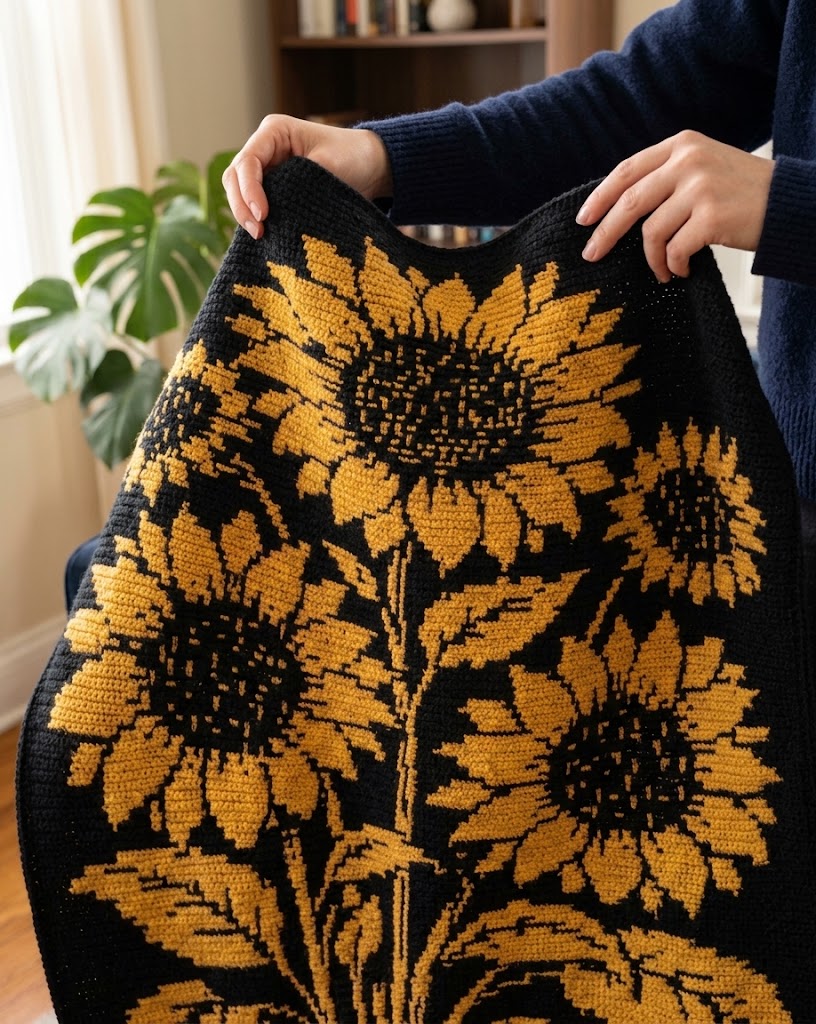
- Technique & Style: Overlay mosaic crochet worked from right to left on right-side rows only, alternating Color A (BLOsc) and Color B (FLOdc drop stitches).
- Zero Ends to Weave In: All side fringe cut tails are completely encased inside a seamless double envelope border worked in the round.
- Included Guides: Full row-by-row written instructions in standard US terms paired with marked high-resolution printable stitch charts.
- Yarn & Gauge: Uses an effortless 50/50 yardage split between Color A and Color B, easily customizable for DK #3, Worsted #4, or Bulky #5 weights.
BLUF (Bottom Line Up Front): Steam blocking is the only effective method to block 100% acrylic crochet blankets because heat permanently relaxes synthetic plastic fibers into their final shape. Hover a garment steamer or steam iron 1.5 to 2 inches above pinned fabric—never touch the iron directly to yarn, which causes irreversible fiber melting.
Table of Contents
- 1. The Science of Acrylic Fibers & Heat Relaxation
- 2. Essential Equipment: Mats, Pins & Steamers
- 3. Section-by-Section Pinning for Large Afghans
- 4. The 2-Inch Hover Rule: Steaming Without Melting
- 5. The Cooling Window & Setting Fiber Memory
- 6. Blocking Methods: Steam vs. Wet vs. Spray
- 7. Frequently Asked Questions
1. The Science of Acrylic Fibers & Heat Relaxation
Many makers mistakenly treat acrylic yarn the same way they treat animal fibers like sheep's wool. But unlike wool—which possesses natural protein scales that absorb water and lock into shape upon drying—acrylic is a synthetic polymer (essentially plastic).
Soaking an acrylic blanket in water (wet blocking) does virtually nothing once it dries; the acrylic fibers simply spring back to their original stiff, crimped shape. To permanently open up mosaic stitch definition, drape gracefully, and square corners, acrylic requires controlled heat via hot steam.
Golden Sunburst Blossom Floral Blanket
Complex circular petals and radiant sunburst diamonds that blossom into silky drape once steam blocked.
2. Essential Equipment: Mats, Pins & Steamers
Before starting, gather:
- Steam Source: A handheld garment steamer or a household steam iron with a continuous high-steam trigger.
- Interlocking Foam Mats: Grid-marked EVA foam tiles to ensure true 90-degree corners.
- Rust-Proof Stainless Steel T-Pins: Never use cheap sewing pins, which can corrode under steam and leave permanent orange rust spots on your yarn!
3. Section-by-Section Pinning for Large Afghans
Most throw blankets measure 50" × 60" or larger—far bigger than standard blocking mat sets. Do not panic! You do not need to block the entire blanket all at once.
- Assemble enough mats to cover half or one-third of the blanket length.
- Pin one corner squarely at 90 degrees, then gently stretch the side edge along the grid line, inserting T-pins every 2 to 3 inches.
- Steam that section completely, allow it to cool, unpin, and shift the blanket forward to steam the next section!
4. The 2-Inch Hover Rule: Steaming Without Melting
CRITICAL SAFETY RULE: Never allow the metal soleplate of an iron to touch acrylic yarn! Because acrylic is plastic, direct iron contact will instantly melt the fibers into a shiny, crushed, glassy plastic scab (known in the crochet community as "killing" acrylic).
Hold your steamer nozzle or iron approximately 1.5 to 2 inches above the fabric. Slowly sweep across the stitches, releasing generous clouds of hot steam. As the steam penetrates, you will physically see the stitches relax, flatten, and expand into their final measurements.
Fairy Meadow & Woodland Friends Blanket
Delicate woodland bunnies and toadstools that achieve ultra-soft baby blanket cuddliness through proper steam blocking.
5. The Cooling Window & Setting Fiber Memory
Once a section is steamed, resist the temptation to unpin immediately! Synthetic polymers lock into their new shape as they cool down. Leave the blanket pinned undisturbed for 20 to 30 minutes until the fabric is completely cold and dry to the touch. Once cooled, the blanket will retain its drape and straight edges through future wash cycles.
6. Blocking Methods: Steam vs. Wet vs. Spray
| Method | Best Fiber Compatibility | Equipment Required | Drying Time | Permanence on Acrylic |
|---|---|---|---|---|
| Steam Blocking | 100% Acrylic, Polyester, Blends | Garment steamer or steam iron + pins | 20 – 30 Minutes | Permanent fiber relaxation |
| Wet Blocking | 100% Wool, Alpaca, Cotton | Basin, wool wash, towels, mats | 24 – 48 Hours | Temporary (Resets upon drying) |
| Spray Blocking | Delicate silk, fine lace | Spray bottle, fine mist, pins | 4 – 6 Hours | Zero effect on acrylic |
Frequently Asked Questions
Q: What does 'killing acrylic' mean in crochet blocking?
'Killing' acrylic occurs when extreme direct heat melts the plastic yarn fibers. The stitches lose all their plump elasticity, become paper-thin and limp, and take on an unnatural synthetic shine that cannot be reversed.
Q: Can I wet block an acrylic crochet blanket?
You can wash it, but soaking and pinning an acrylic blanket to dry will not block it. Because acrylic fibers do not absorb moisture into their internal core, wet blocking without heat produces zero permanent change in gauge or drape.
Q: What kind of pins should I use so my blanket doesn't rust?
Always use labeled rust-proof stainless steel T-pins or blocking combs. Standard nickel-plated dressmaker pins can oxidize rapidly under warm steam, permanently staining light yarn colors with stubborn brown rust marks.
Q: How long should I leave the blanket pinned to the blocking mats?
Leave the blanket pinned for at least 20 to 30 minutes after steaming, or until every section is completely cool and dry to the touch. The cooling period is when the relaxed polymer chains stabilize into their final shape.
Radiating golden sunburst petals and botanical vines that bring sunny cheer into any living room. High-contrast, easy-to-follow chart with zero ends to weave in.
Planning to Crochet This Blanket?
Use our Free Crochet Blanket Yardage Calculator to calculate exact stitch counts, row counts, and 50/50 overlay mosaic color splits for any custom size.
Shop Matching Mosaic Blanket Patterns
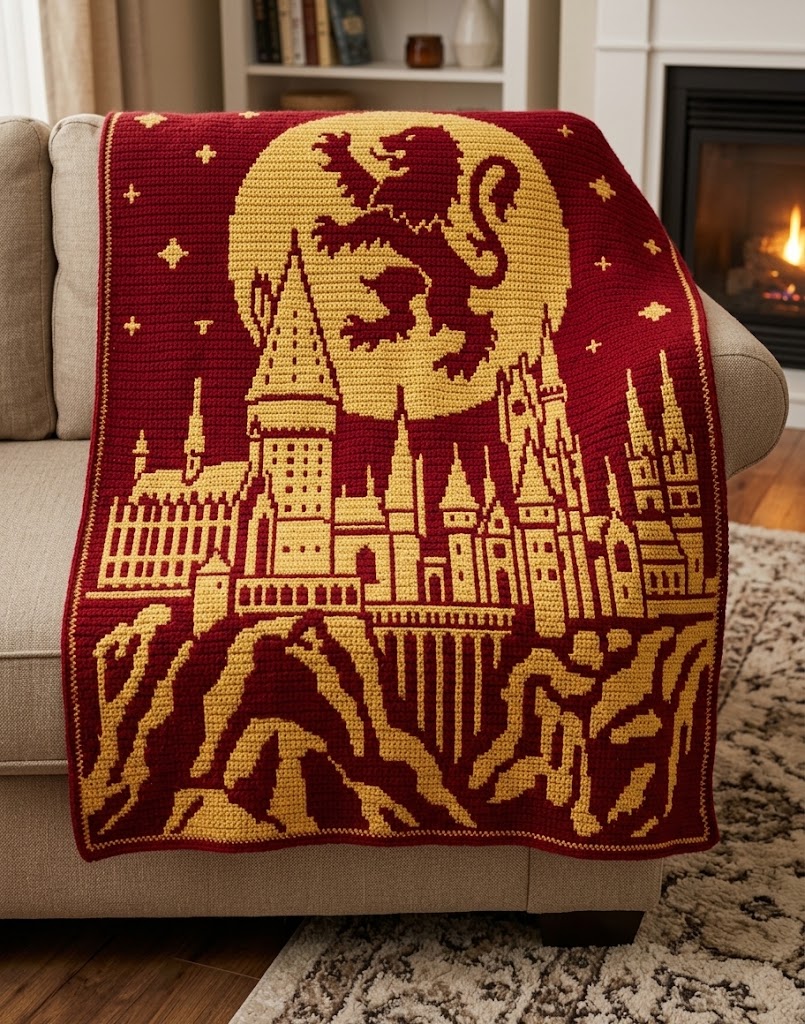
Brave Lion Crest House of Chivalry & Courage Mosaic Crochet Blanket Pattern
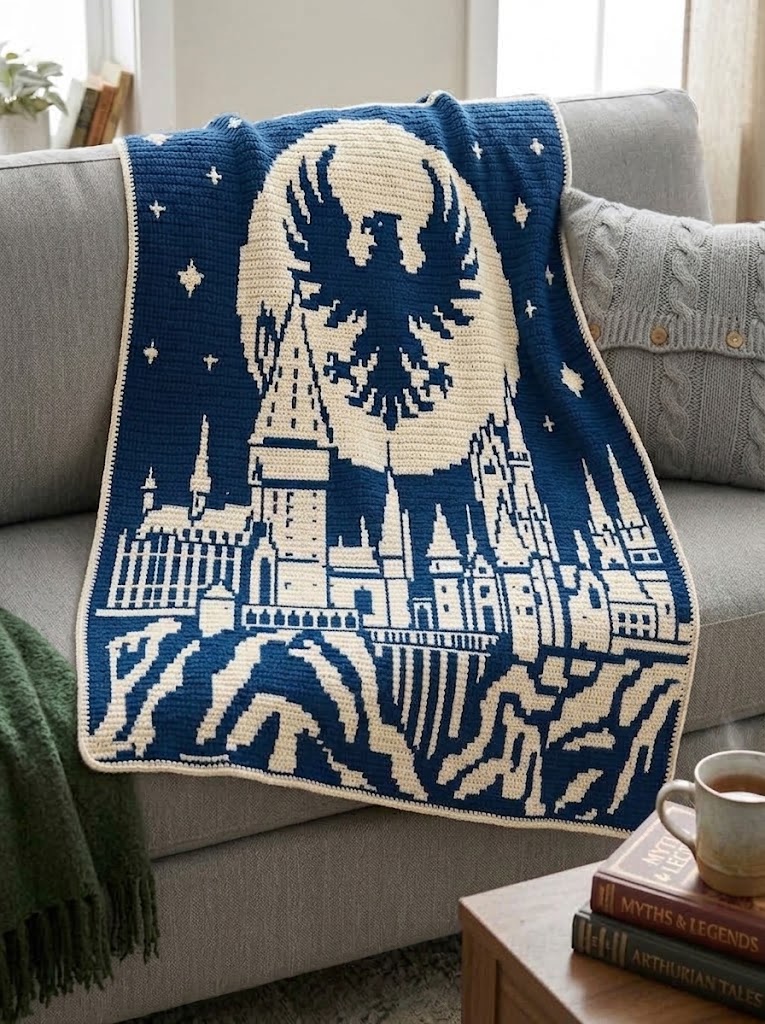
Wise Eagle Crest House of Wit & Bronze Mosaic Crochet Blanket Pattern
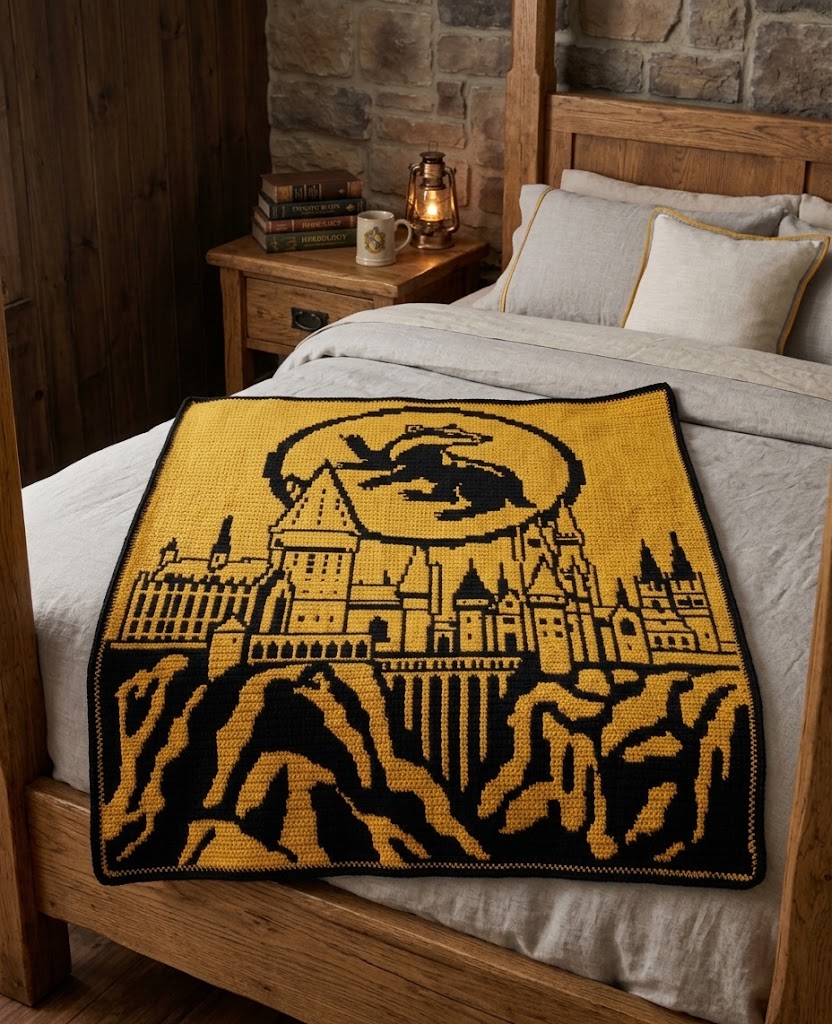
Loyal Badger Crest House of Earth & Gold Mosaic Crochet Blanket Pattern
Related Crochet Tutorials & Guides
How to Fix Slanting Edges & Curling in Mosaic Crochet (Tension & Hook Size Secrets)
Is your mosaic blanket slanting into a parallelogram or curling like a taco? Discover the technical reasons behind tension distortion and 4 quick fixes to achieve perfectly straight edges.
How to Calculate Yarn Yardage for a Mosaic Crochet Blanket (Color A vs Color B Ratio)
Never run out of yarn mid-project again. Accurately calculate total yardage, estimate Color A vs Color B ratios, and budget for envelope borders with our proven formula.
How to Crochet a Double Envelope Border (Hide All Yarn Tails Without Weaving)
Say goodbye to weaving in hundreds of fringe ends. Learn how to work an elegant double envelope border that encases all raw yarn tails inside a clean double-layered hem.
🔗 Share or Reference This Guide on Your Blog
Are you a crochet blogger, yarn creator, or craft curator? You are welcome to reference or cite this tutorial on your website. Click below to copy a ready-to-use HTML link.
<p>Reference: <a href="https://crochetpinterest.com/blog/how-to-block-large-acrylic-crochet-blanket" target="_blank" rel="noopener">How to Steam Block a Large Acrylic Crochet Blanket (Step-by-Step Without Melting) on crochet pinterest</a>.</p>
[How to Steam Block a Large Acrylic Crochet Blanket (Step-by-Step Without Melting) on crochet pinterest](https://crochetpinterest.com/blog/how-to-block-large-acrylic-crochet-blanket)